A Simple Guide From Kidney Failure to Life After Transplant – That’s Me
Finding out that your kidneys are failing can feel scary and confusing. Most people immediately start asking questions like:
- “Will I need dialysis?”
- “Can I survive kidney failure?”
- “When do doctors decide to do a kidney transplant?”
- “What is life like after a transplant?”
These questions are completely normal.
A kidney transplant is not just a medical procedure. For many people, it is a second chance at life. Understanding the process can help patients and families feel more prepared and less afraid.
In this article, I will explain in simple English:
- What kidney failure is
- When a kidney transplant becomes necessary
- How doctors decide if someone is ready for transplant
- The difference between dialysis and transplant
- How donors are selected
- What happens during surgery
- What life is like after transplant
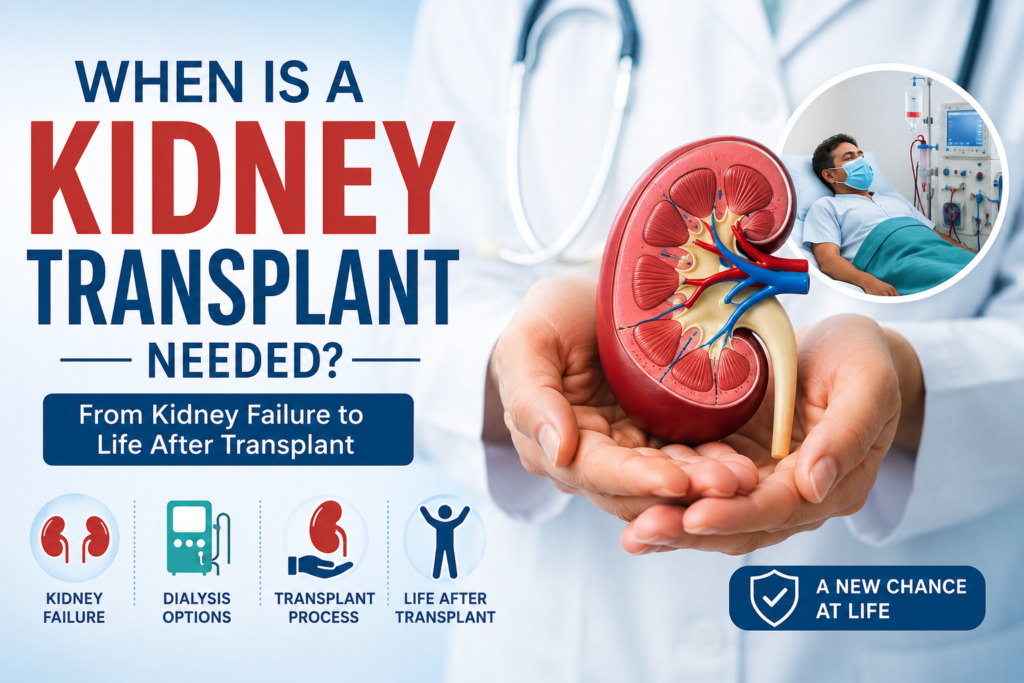
What Do the Kidneys Do?
Your kidneys are two bean-shaped organs located in your lower back. Even though they are small, they do very important jobs every day.
Healthy kidneys help:
- Remove waste from the blood
- Remove extra water from the body
- Control blood pressure
- Balance minerals like sodium and potassium
- Help make red blood cells
- Keep bones healthy
Kidneys work 24 hours a day without stopping.
When the kidneys stop working properly, waste and fluid start building up inside the body. This can become dangerous over time.
What Is Kidney Disease?
Kidney disease happens when the kidneys slowly lose their ability to work correctly.
This usually happens gradually over months or years. Many people do not notice symptoms in the early stages.
Common causes of kidney disease include:
- Diabetes
- High blood pressure
- Kidney infections
- Genetic diseases
- Autoimmune diseases
- Long-term use of certain medicines
Kidney disease is often called Chronic Kidney Disease (CKD).
Doctors measure kidney function using a number called GFR (Glomerular Filtration Rate).
The lower the GFR, the weaker the kidneys are.
Stages of Kidney Disease
Kidney disease has 5 stages.
Stage 1
Kidneys are still working well, but there may be mild damage.
Stage 2
Kidney function becomes slightly lower.
Stage 3
Waste begins building up in the body. Some symptoms may appear.
Stage 4
Kidneys become severely damaged. Doctors begin preparing patients for dialysis or transplant.
Stage 5 – Kidney Failure
Kidney function falls below 15%.
This stage is also called:
- End-Stage Renal Disease (ESRD)
- End-Stage Kidney Disease (ESKD)
At this point, the kidneys cannot properly clean the blood anymore.
Symptoms of Kidney Failure
When kidney failure develops, many symptoms may appear.
Common symptoms include:
- Swelling in the legs or face
- Extreme tiredness
- Nausea and vomiting
- Loss of appetite
- Trouble breathing
- High blood pressure
- Muscle cramps
- Itching
- Trouble sleeping
- Foamy urine
- Reduced urine output
Some people feel very weak and cannot do normal daily activities anymore.
When Is a Kidney Transplant Needed?
A kidney transplant is usually considered when the kidneys are no longer able to support the body properly.
Most doctors begin discussing transplant when:
- Kidney function becomes very low
- GFR drops below 20
- Symptoms become severe
- Dialysis is expected soon
- Dialysis has already started
A transplant is often considered the best long-term treatment for many people with kidney failure – and i am the one of them.
However, not every patient is automatically ready for transplant. Doctors first check whether the patient is healthy enough for surgery. And then decide to consider for Kidney transplant
Dialysis vs Kidney Transplant
Many people wonder which option is better: dialysis or transplant.
I was also confused
Both treatments can save lives, but they are very different.
What Is Dialysis?
Dialysis is a treatment that removes waste and extra fluid from the blood when the kidneys cannot do it.
There are two main types:
- Hemodialysis
- Peritoneal dialysis
Dialysis helps people survive, but it does not fully replace normal kidney function.
Many patients on dialysis feel:
- Tired
- Weak
- Restricted in diet and fluids
- Limited in travel and work
What Is a Kidney Transplant?
A kidney transplant is surgery where a healthy kidney from a donor is placed into the patient’s body.
As i received the kidney from my wife – Million Thanks to MY Lovely wife
The transplanted kidney takes over the work of failed kidneys.
For many patients, transplant offers:
- Better quality of life
- More energy
- Fewer food restrictions
- More freedom
- Longer survival compared to long-term dialysis
That is why many doctors recommend transplant whenever possible.
And seriously my life has changed
Can Someone Get a Transplant Before Dialysis?
Yes.
This is called a preemptive kidney transplant.
It means the transplant is done before dialysis becomes necessary.
Some doctors prefer this option because:
- The body stays healthier
- Patients avoid long-term dialysis complications
- Recovery may be smoother
- Overall outcomes can be better
However, this depends on finding a suitable donor in time.
Who Can Donate a Kidney?
One healthy person can live with only one kidney.
Because of this, a healthy person may donate one kidney to someone with kidney failure.
Living donors are often:
- Parents
- Brothers or sisters
- Husband or wife
- Relatives
- Close friends
In some cases, deceased donors can also provide kidneys for transplant.
How Doctors Check Kidney Donors
Donors go through many medical tests to make sure donation is safe.
Doctors check:
- Blood type compatibility
- Kidney function
- Overall health
- Blood pressure
- Diabetes risk
- Infections
- Mental and emotional readiness
The most important goal is protecting both the donor and the patient.
A donor should never feel pressured into donating.
What Happens Before Transplant Surgery?
Before surgery, i went through a complete transplant evaluation.
Which include:
- Blood tests
- Heart tests
- Chest X-rays
- Infection screening
- Dental checks
- Cancer screening
- Psychological evaluation
Doctors wanted to make sure that I was healthy enough for surgery and recovery.
I was also educated about:
- Medicines
- Risks
- Recovery
- Long-term care
What Happens During Kidney Transplant Surgery? In General
During surgery:
- The patient receives anesthesia
- The healthy kidney is placed in the lower abdomen
- Blood vessels are connected
- The ureter is connected to the bladder
Usually, the patient’s old kidneys are not removed unless necessary.
The surgery often takes several hours.
Many transplanted kidneys begin working quickly, sometimes within hours or days.
Recovery After Kidney Transplant
Recovery takes time and patience.
Most patients stay in the hospital for several days after surgery.
I was kept for 24 days, later discharged after stent removal
I was kept alone in a room to prevent infection
Doctors closely monitor:
- Urine output
- Creatinine levels
- Blood pressure
- Signs of infection
- Signs of rejection
I too use to make charts – urine output, intake, output
I use to feel tired at first, but energy slowly improved over time.
AND THE BIGGEST RELEIF WAS – NO RESTRICTION ON LIQUID INTAKE
Anti-Rejection Medicines
After transplant, the immune system may try to attack the new kidney.
This is called rejection.
To prevent rejection, patients must take special medicines called:
- Immunosuppressants
- Anti-rejection medicines
These medicines are extremely important.
Patients usually need them for life.
Skipping medicines can damage the transplanted kidney.
Common Side Effects After Transplant
Some side effects may happen because of transplant medicines.
Possible side effects include:
- Weight gain
- Increased blood sugar
- High blood pressure
- Weak bones
- Higher infection risk
- Mood changes
Doctors carefully monitor patients and adjust medicines when needed.
To avoid these i do workout sometimes twice/thrice a week but i skip a lot – which you should not
Life After Kidney Transplant
Many people are surprised by how much life improves after transplant.
But I experienced:
- Better energy
- Better appetite
- Improved sleep
- More freedom
- Better mental health
Many people return to:
- Work
- School
- Exercise
- Traveling
- Family activities
A transplant does not mean life is over. For many people, it feels like life starts again.
Important Lifestyle Changes After Transplant
Taking care of the new kidney is very important.
Patients should:
Take Medicines Exactly as Prescribed
Never skip doses.
Attend Regular Checkups
Frequent blood tests help doctors monitor kidney health.
Drink Enough Water
Proper hydration is important unless the doctor says otherwise.
Eat a Healthy Diet
Patients should avoid excessive salt, processed foods, and unhealthy eating habits.
Prevent Infections
Because anti-rejection medicines weaken the immune system, infection prevention is very important.
Patients should:
- Wash hands often
- Avoid meeting sick people
- Wear masks when needed
- Follow vaccine recommendations
Emotional Challenges of Kidney Failure and Transplant
Kidney disease affects mental health too.
Many patients experience:
- Fear
- Anxiety
- Depression
- Stress
- Uncertainty
This is normal.
Family support, counseling, patient communities, and faith can help people stay emotionally strong during the journey.
Talking openly about feelings is important.
How Family Support Changes Everything
Family support plays a huge role in recovery.
A supportive family can help patients:
- Stay motivated
- Take medicines properly
- Attend appointments
- Recover emotionally
Many transplant patients say family support gave them strength during difficult times.
For living donors, the emotional bond can become even stronger after transplant.
Can a Transplanted Kidney Last Forever?
A transplanted kidney may last many years, but not forever in every case.
Some transplanted kidneys last:
- 10 years
- 15 years
- 20 years or longer
The lifespan depends on:
- Medicine adherence
- Overall health
- Infections
- Blood pressure control
- Diabetes control
- Regular medical care
Taking care of the transplanted kidney every day is extremely important.
Warning Signs After Transplant
Patients should contact their doctor if they notice:
- Fever
- Swelling
- Sudden weight gain
- Reduced urine output
- Pain near the transplant area
- High blood pressure
- Increased creatinine
Early treatment can prevent serious complications.
Hope After Kidney Failure
Hearing the words “kidney failure” can feel overwhelming.
But many people with kidney transplants go on to live meaningful, active, and happy lives.
Today, transplant medicine is more advanced than ever before.
With proper care, support, and regular follow-up, many transplant patients enjoy years of healthy living.
Final Thoughts
A kidney transplant is usually needed when the kidneys can no longer keep the body healthy and safe.
Although the journey may feel difficult, transplant can offer hope, freedom, and a second chance at life.
If you or a loved one is facing kidney failure:
- Learn as much as possible
- Follow your doctor’s advice
- Ask questions
- Stay hopeful
- Never give up
Kidney failure is not the end of life.
For many people, a kidney transplant becomes the beginning of a new chapter.
Be Happy Be Healthy💚