A Personal Story of Hope, Resilience, and Second Chances
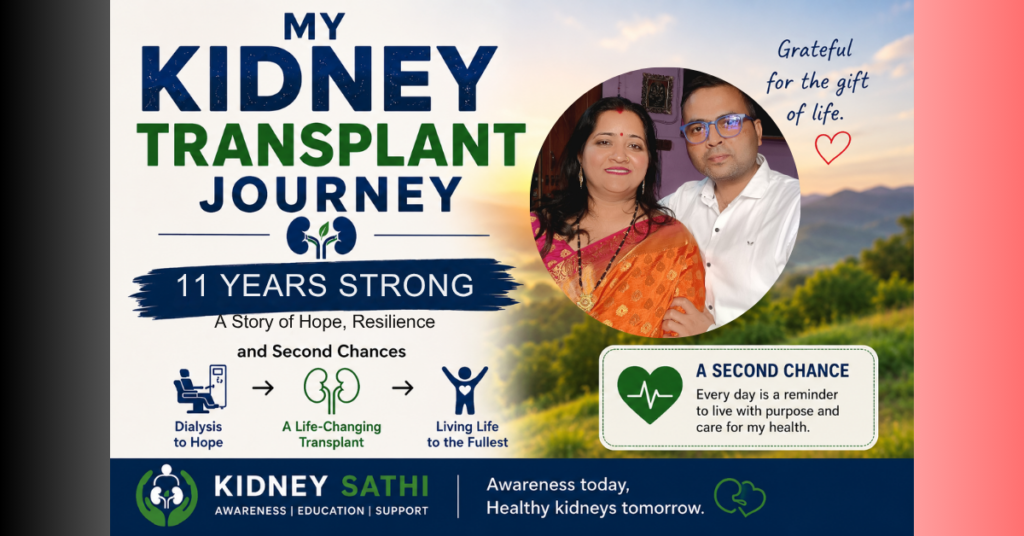
By Bhaskar, Founder of Kidney Sathi
There are moments in life that change everything. For me, that moment came when I learned that my kidneys were failing due to uncontrolled high blood pressure. I never imagined that one day I would need dialysis, a kidney transplant, and lifelong medications just to stay healthy.
Today, more than 11 years after my kidney transplant, I am living a productive life, working a full-time job, supporting my family, and helping kidney patients through Kidney Sathi. My journey has not been easy, but it has taught me valuable lessons about health, gratitude, discipline, and hope.
I am sharing my story to inspire kidney patients, transplant recipients, caregivers, and anyone who wants to understand the realities of living with kidney disease.
Life Before Kidney Failure
Like many people, I never paid much attention to my kidneys. I was busy with work, family responsibilities, and everyday life. Although I knew that blood pressure was important, I did not fully understand how dangerous uncontrolled hypertension could be.
High blood pressure is often called the “silent killer” because it can damage the body for years without causing noticeable symptoms. Unfortunately, it can also cause severe damage to the kidneys.
Over time, my kidney function declined because of high blood pressure. By the time the problem became serious, my kidneys had already suffered significant damage.
Receiving the diagnosis was one of the most difficult moments of my life. Suddenly, I was forced to face a reality I had never imagined.
Hearing the Words No One Wants to Hear
When doctors explained that my kidneys were failing, I felt shocked and overwhelmed.
Questions flooded my mind:
- Why did this happen?
- Will I be able to work?
- What will happen to my family?
- Can I recover?
- How long can I live with kidney disease?
These are the same questions many kidney patients ask when they receive a diagnosis.
At first, it felt as though my future had become uncertain overnight.
However, I soon realized that fear alone would not help me. I needed to understand my condition, follow medical advice, and prepare for the next stage of treatment.
Six Months on Dialysis
Before my transplant, I underwent dialysis for approximately Six months.
Anyone who has experienced dialysis understands the physical and emotional challenges that come with it.
Dialysis helps remove waste products and excess fluid from the blood when the kidneys can no longer do their job effectively. While it is a lifesaving treatment, it can also be exhausting.
During this period, I had to adjust my lifestyle significantly. My daily routine revolved around treatments, medical appointments, medications, and dietary restrictions.
The experience taught me several important lessons:
- Never take good health for granted.
- Time with family becomes even more precious during difficult periods.
- Mental strength is just as important as physical strength.
- Support from loved ones can make an enormous difference.
Despite the challenges, I knew dialysis was helping me survive while I waited for a transplant.
The Gift That Changed My Life
In 2015, my life changed forever.
My wife became my kidney donor.
There are no words that can fully express the gratitude I feel toward her. Organ donation is one of the greatest gifts a person can give.
Knowing that someone you love is willing to undergo surgery to help save your life creates emotions that are difficult to describe.
After the necessary evaluations and medical preparations, my transplant surgery was performed at KEM Hospital in Mumbai, Maharashtra.
The transplant represented more than a medical procedure.
It represented hope.
It represented a second chance.
It represented the possibility of rebuilding my life.
The Day of the Transplant
Like many transplant patients, I felt a mixture of excitement, nervousness, and fear before surgery.
Even though I trusted the medical team, major surgery naturally creates anxiety.
I remember thinking about my family, my future, and the opportunity I was being given.
The transplant surgery was a major milestone in my life.
When the surgery was completed, a new chapter began.
However, transplantation is not the end of the journey.
In many ways, it is the beginning of a new lifestyle that requires discipline, responsibility, and lifelong commitment.
Recovery After Transplant
The recovery period required patience.
My body needed time to heal and adjust to the transplanted kidney.
Regular blood tests became an important part of my life. Doctors closely monitored kidney function and medication levels to ensure that everything was working properly.
One thing many people do not realize is that kidney transplantation is not a cure.
It is a treatment.
A transplant can provide an excellent quality of life, but recipients must continue taking medications and attending follow-up appointments for the rest of their lives.
This was one of the biggest lessons I learned during recovery.
The Biggest Challenge: Medications and Follow-Up
If someone asks me what the most important part of long-term transplant success is, my answer is simple:
Never ignore your medications and follow-up appointments.
For me, maintaining medication schedules and attending regular medical checkups has been one of the biggest challenges—and one of the most important responsibilities.
Anti-rejection medications help prevent the immune system from attacking the transplanted kidney.
Missing doses can increase the risk of rejection and other complications.
Over the years, I developed habits that helped me stay consistent:
- Taking medications at the same time every day.
- Keeping reminders and alarms.
- Never skipping scheduled blood tests.
- Following medical advice carefully.
- Maintaining regular communication with healthcare providers.
These habits may seem simple, but they play a critical role in protecting a transplanted kidney.
Eleven Years Later: Life Today
Today, more than 11 years after my transplant, I continue to live an active and productive life.
I work a private job for approximately 10 hours each day.
Many people are surprised when they learn this because they assume transplant recipients cannot work normally.
The reality is that many transplant recipients can enjoy active, fulfilling lives when they follow medical guidance and take care of their health.
My journey has taught me that a transplant does not define a person.
It becomes one part of a larger story.
I continue to pursue my goals, support my family, and look toward the future with optimism.
Why I Started Kidney Sathi
As the years passed, I realized that many kidney patients feel confused, frightened, and alone.
I remembered how overwhelming the journey had been for me.
That is why I started Kidney Sathi.
My goal is simple:
To spread awareness about kidney health, educate patients and families, and provide hope through real-life experiences.
I am not a doctor.
I do not provide medical treatment or personalized medical advice.
However, I am someone who has lived through kidney failure, dialysis, transplantation, and long-term recovery.
Sometimes patients simply need to hear from someone who understands their experience.
Through Kidney Sathi, I hope to build a supportive community where people can learn, connect, and feel encouraged.
Lessons I Learned from Kidney Disease
Looking back, there are several lessons that stand out.
1. Health Is Your Greatest Wealth
Many people focus on careers, finances, and responsibilities while neglecting their health.
Nothing becomes more important than health when it is threatened.
2. High Blood Pressure Must Be Taken Seriously
High blood pressure can silently damage the kidneys for years.
Regular monitoring and treatment can help prevent serious complications.
3. Family Support Matters
My journey would have been much more difficult without the support of my family, especially my wife.
Their encouragement helped me stay strong during difficult times.
4. Discipline Saves Lives
Taking medications consistently and attending follow-up appointments are not optional.
They are essential.
5. Hope Is Powerful
A kidney disease diagnosis does not mean life is over.
With proper treatment, many patients continue to live meaningful and productive lives.
My Message to Kidney Patients
If you are currently dealing with kidney disease, dialysis, or a recent transplant, I want you to know something important:
You are stronger than you think.
There may be difficult days.
There may be moments of fear and uncertainty.
But there is also hope.
Follow your medical team’s advice, stay informed, and take your treatment seriously.
Most importantly, do not ignore the conditions that commonly damage kidneys.
Please take care of yourself.
Keep your blood pressure under control.
Manage diabetes carefully if you have it.
Get regular health checkups.
Prevention is always better than treatment.
Final Thoughts
When I look back on my journey—from kidney failure caused by high blood pressure, to dialysis, to receiving a kidney from my wife, to living more than 11 years after transplantation—I feel grateful.
Grateful for modern medicine.
Grateful for my family.
Grateful for my donor.
And grateful for the opportunity to help others through Kidney Sathi.
If my story inspires even one person to monitor their blood pressure, protect their kidneys, or remain hopeful during a difficult time, then sharing it has been worthwhile.
Life after kidney transplantation is not always easy.
But it can be beautiful, meaningful, and full of possibilities.
And after 11 years, I can confidently say that every day is a gift worth protecting.
As someone whose kidney failure was caused by uncontrolled high blood pressure and who has now lived with a kidney transplant for more than 11 years, I understand how easy it is to underestimate hypertension. My experience taught me that managing blood pressure is one of the most important steps in protecting kidney health.
I’m Bhaskar, founder of Kidney Sathi. I’m a kidney transplant recipient, not a doctor. My goal is to spread kidney health awareness based on my personal experience and reliable medical information