🔵 Introduction
Kidney disease is often referred to as a “silent condition” because it develops gradually and may not cause obvious symptoms in its early stages. Many people tend to overlook small changes in their bodies, assuming they are minor or temporary issues. Unfortunately, this can delay diagnosis and allow the condition to progress without notice.
The good news is that your body usually sends early warning signals before kidney disease becomes severe. These signs may be subtle, but recognizing them at the right time can make a significant difference. Early detection can help prevent kidney failure, reduce complications, and improve long-term health outcomes.
In this article, we’ll break down the early signs of kidney disease in simple, easy-to-understand language, so you can stay informed and take action before it’s too late.
🔵 Why Early Detection of Kidney Disease Is Important
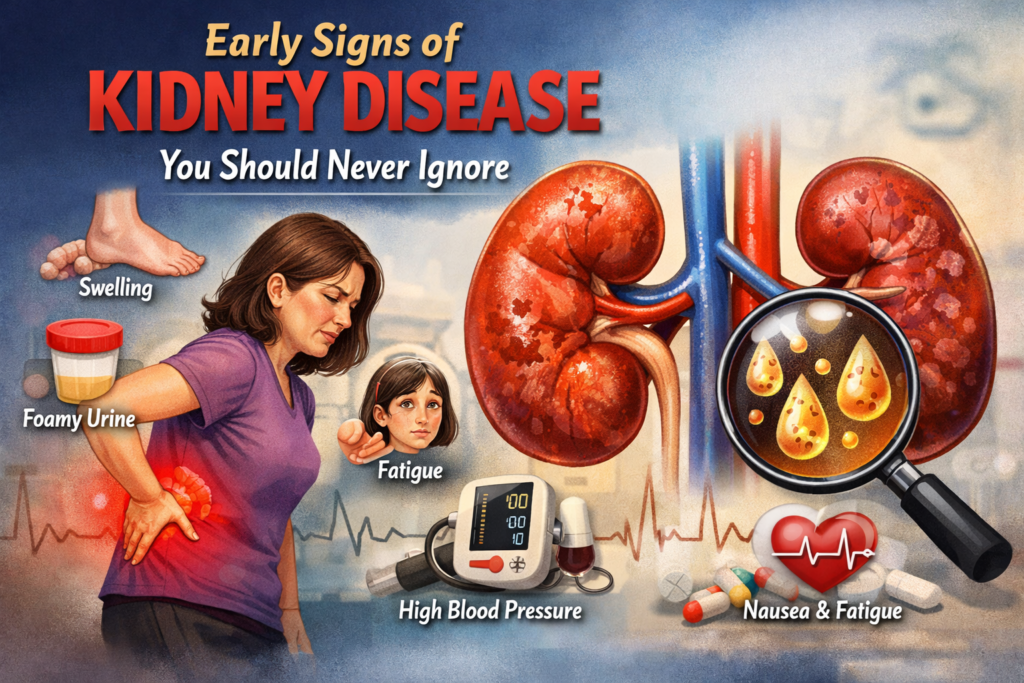
Early detection of kidney disease is one of the most important steps you can take to protect your overall health. When the condition is caught in its early stages, it can often be effectively managed with simple lifestyle changes, the right medications, and regular medical monitoring. This not only helps preserve kidney function but also reduces the risk of complications.
On the other hand, ignoring early symptoms can allow the disease to progress silently, leading to permanent kidney damage over time. In more advanced stages, treatment options may become more intensive, including dialysis or even a kidney transplant—both of which can have a major impact on a person’s daily life and well-being.
By recognizing the warning signs early and taking timely action, you give yourself the best chance to slow down or even prevent the progression of kidney disease, allowing you to maintain a healthier and more active life.
🔵 Swelling in Feet, Ankles, or Face
Swelling, medically known as edema, is often one of the earliest warning signs of kidney problems. It occurs when the kidneys are not able to effectively remove excess fluid and waste from the body. As a result, this fluid starts to build up in the tissues.
This buildup commonly leads to swelling in the feet, ankles, and sometimes even the hands and face. One noticeable sign many people experience is puffiness around the eyes, especially in the morning after waking up, which may improve as the day goes on.
While occasional swelling can have harmless causes, frequent or persistent swelling should not be ignored. It may be a sign that the kidneys are not functioning properly. Recognizing this symptom early and seeking medical advice can help detect potential kidney issues before they become more serious.
🔵 Changes in Urination
Changes in urination are one of the clearest and most important signs of kidney health. Since the kidneys are responsible for filtering waste and keeping the body’s fluid levels balanced, any problem with their function often shows up in your urine.
You should pay close attention to certain changes. For example, needing to urinate more often than usual—especially at night—can be an early warning sign. Urine that appears foamy or bubbly may indicate protein leakage, which suggests the kidneys are not filtering properly. You might also notice changes in color, such as urine that looks darker, unusually pale, or different from your normal pattern. In some cases, there may be a significant increase or decrease in the amount of urine produced.
These changes happen because the kidneys play a vital role in removing waste and maintaining fluid balance in the body. When this process is disrupted, it can signal that something is not working as it should. Recognizing these signs early and seeking medical advice can help detect potential kidney problems before they become more serious.
🔵 Constant Fatigue and Weakness
Feeling constantly tired without a clear reason is not something you should ignore—it can sometimes be a sign of underlying kidney problems. When the kidneys are not functioning properly, they are unable to filter waste and toxins effectively. As these substances build up in the blood, they can leave you feeling drained, sluggish, and mentally fatigued.
This ongoing fatigue often shows up as low energy levels, general weakness, and difficulty handling everyday tasks that once felt easy. In addition, kidney disease can lead to anemia, a condition where the body doesn’t have enough healthy red blood cells to carry oxygen efficiently. This can make the feeling of exhaustion even worse.
If you find yourself feeling tired all the time despite getting enough rest, it’s important not to overlook it. Considering kidney health as a possible cause and seeking medical advice early can help identify the issue and prevent it from becoming more serious.
🔵 Loss of Appetite and Nausea
Kidney disease can also impact the digestive system, mainly because of the buildup of waste and toxins in the body. When the kidneys are not working properly, these toxins are not filtered out effectively, which can affect how you feel overall—especially when it comes to eating and digestion.
You may begin to notice a loss of appetite, making it harder to eat regular meals. Some people experience ongoing nausea, and in more advanced cases, this can lead to vomiting. Over time, these issues may result in unintentional weight loss, as the body is not receiving or retaining enough nutrition.
At first, these symptoms might seem mild or easy to ignore. However, if they persist or worsen, they can be a sign that the body is struggling to remove waste properly. Recognizing these warning signs early and seeking medical advice can help prevent the condition from progressing further.
🔵 Shortness of Breath
Shortness of breath is another important warning sign that should never be overlooked. In people with kidney problems, it can develop for a couple of key reasons. One common cause is fluid buildup in the lungs, which happens when the kidneys are unable to remove excess fluid from the body. Another reason can be reduced oxygen levels, making it harder for the body to function normally.
As a result, you may start to feel breathless even during simple activities like walking, climbing stairs, or doing routine tasks. In more advanced cases, breathing can feel difficult even when you are resting, which can be especially concerning.
While shortness of breath can have multiple causes, experiencing it frequently or without a clear reason should not be ignored. It may be a sign that your body is struggling with fluid balance or oxygen delivery, and seeking medical attention early can help prevent more serious complications.
🔵 High Blood Pressure
High blood pressure and kidney disease are closely linked, and each can make the other worse. When blood pressure remains uncontrolled, it puts constant strain on the tiny blood vessels in the kidneys. Over time, this damage reduces the kidneys’ ability to filter waste and maintain proper fluid balance.
At the same time, when the kidneys are not functioning well, they can contribute to rising blood pressure by disrupting the body’s natural regulation of fluids and hormones. This creates a harmful cycle—high blood pressure damages the kidneys, and damaged kidneys push blood pressure even higher.
If this cycle is not managed properly, both conditions can continue to worsen. The good news is that with early detection, proper treatment, and healthy lifestyle changes, it’s possible to control blood pressure and protect kidney function, reducing the risk of serious complications.
🔵 Itching and Dry Skin
When the kidneys are not functioning properly, they are unable to effectively remove waste products from the blood. As these toxins build up in the body, they can begin to affect the skin in noticeable ways.
You may experience dryness, persistent itching, or general skin irritation. In some cases, the itching can become quite uncomfortable and difficult to manage, especially if the underlying cause is not addressed.
While these symptoms might seem minor at first, they can be an important sign that something is wrong internally. Ongoing or unexplained skin issues should not be ignored, as they may point to underlying kidney problems. Recognizing these signs early and seeking medical advice can help prevent the condition from becoming more serious.
🔵 Difficulty in Concentration
Kidney disease can also have an impact on brain function. When the kidneys are not working properly, waste products begin to build up in the blood, and in some cases, oxygen delivery to the brain may be affected. This can interfere with how clearly and efficiently the brain functions.
As a result, you may experience difficulty concentrating, trouble remembering things, or a general sense of mental fatigue. Tasks that once felt simple may start to feel more challenging, and staying focused for long periods can become harder.
These symptoms are often subtle and easy to overlook, especially when they are mistaken for stress or lack of sleep. However, when they persist, they may be a sign that the body is struggling internally. Paying attention to these changes and seeking medical advice can help identify the underlying cause and prevent further complications.
🔵 Who Is at Risk of Kidney Disease
Some people are naturally at a higher risk of developing kidney disease, which makes awareness and prevention even more important. If you fall into any of these categories, it’s important to be extra cautious and proactive about your health.
You may be at increased risk if you have conditions like diabetes or high blood pressure, as both can gradually damage the kidneys over time if not properly managed. A family history of kidney disease can also raise your chances, since certain kidney conditions may run in families. In addition, frequent or long-term use of painkillers—especially without medical supervision—can put extra strain on the kidneys.
Being overweight or physically inactive is another key risk factor, as it is often linked to other conditions that affect kidney health, such as diabetes and hypertension.
If you belong to any of these risk groups, regular screening and routine health check-ups are essential. Early monitoring can help detect any changes in kidney function at the right time, allowing for timely intervention and better long-term outcomes.
🔵 When to See a Doctor
It’s important to consult a doctor if you notice any ongoing or unusual symptoms that could be linked to kidney health. Signs like persistent swelling, noticeable changes in urination, or continuous fatigue and weakness should not be ignored—especially if they last for more than a few days.
You should also seek medical advice if your blood tests show high creatinine levels, as this can be an early indication that your kidneys are not functioning properly. Even if these symptoms seem mild at first, they may point to an underlying issue that needs attention.
Getting medical help early can make a significant difference. Timely diagnosis and treatment can help prevent further kidney damage, slow the progression of the disease, and improve overall health outcomes.
🔵 From My Personal Experience
As a kidney transplant patient, I’ve personally experienced just how important early detection can be. It’s easy to overlook small symptoms in the beginning and assume they’re nothing serious, but in many cases, these early warning signs are the body’s way of signaling a deeper problem.
From my own journey, I’ve learned that paying attention to these subtle changes and acting on them early can make a huge difference. What may seem minor at first can quickly become more serious if ignored.
By listening to your body and taking timely action—whether it’s getting checked, following medical advice, or making necessary lifestyle changes—you can protect your kidney health and reduce the risk of complications. Early awareness isn’t just helpful; it can truly be life-changing.
🔵 Conclusion
Kidney disease is a serious condition, but it usually develops slowly over time rather than appearing suddenly. In most cases, the body gives early warning signs—signals that should never be ignored.
By paying attention to symptoms like swelling, changes in urination, ongoing fatigue, and high blood pressure, you can recognize potential problems early and take action before the condition worsens. These signs may seem small at first, but they often provide important clues about your kidney health.
Regular health check-ups, along with a balanced diet, staying active, and following proper medical advice, are some of the most effective ways to protect your kidneys. Taking these steps early can help you maintain better overall health and reduce the risk of serious complications in the future.