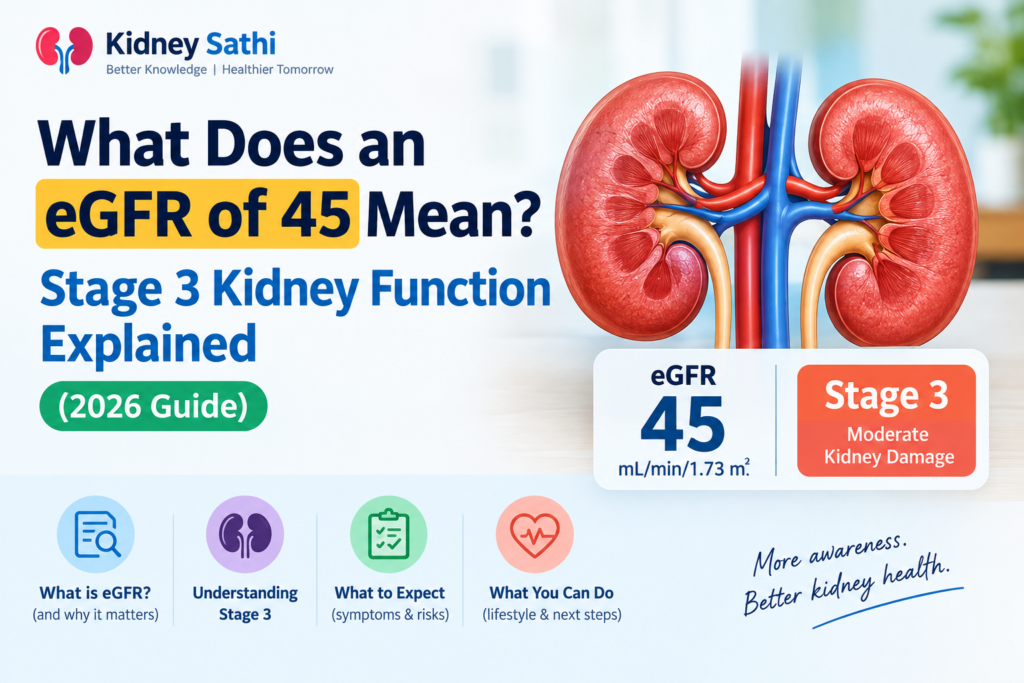
What Does an eGFR of 45 Mean?
Seeing an eGFR of 45 on your lab report is understandably unsettling — it’s a bigger drop than the borderline numbers many people are used to hearing about, and it usually comes with a label attached: Stage 3 chronic kidney disease. But a diagnosis at this stage is not the same as kidney failure, and for most people, it’s a starting point for management, not an emergency.
This guide explains exactly what an eGFR of 45 means, what typically causes it, what symptoms may show up at this stage, and the realistic steps you can take to protect the kidney function you still have.
Hello friends lets go ahead….
What Is eGFR, and Why Does 45 Matter?
eGFR (estimated Glomerular Filtration Rate) is a calculation that estimates how efficiently your kidneys filter waste and excess fluid from your blood. It’s derived from a blood test measuring creatinine — a waste product from normal muscle activity — combined with your age and sex.
The number is expressed in mL/min/1.73m², and it’s used to classify kidney function into stages:
- 90+ — Normal function
- 60–89 — Mildly reduced function
- 45–59 — Mild to moderate reduction (Stage 3a CKD)
- 30–44 — Moderate to severe reduction (Stage 3b CKD)
- 15–29 — Severe reduction (Stage 4 CKD)
- Below 15 — Kidney failure (Stage 5 CKD)
An eGFR of 45 sits right at the boundary between Stage 3a and Stage 3b chronic kidney disease. Unlike an eGFR of 60, which can sometimes reflect normal aging with no real damage, a reading of 45 is generally considered clinically significant on its own — meaning it typically does indicate reduced kidney function, even without additional markers like protein in the urine.
What Does Stage 3 CKD Actually Mean for You?
Stage 3 CKD means your kidneys are functioning at roughly 30–59% of normal capacity. That’s a meaningful decline, but it’s important to understand what it does not mean:
- It does not mean your kidneys are failing.
- It does not necessarily mean you’ll need dialysis.
- It does not mean the decline will definitely continue at the same pace.
Many people live for years — sometimes decades — with kidney function stable in the Stage 3 range, particularly when the underlying cause is identified and managed early. The trajectory from here depends heavily on what’s driving the decline and how well related conditions like blood pressure and blood sugar are controlled.
Common Causes of an eGFR of 45
Several conditions and factors can bring kidney function down to this level:
- Diabetes — the leading cause of chronic kidney disease in the United States, due to long-term damage to the small blood vessels in the kidneys
- High blood pressure — the second most common cause, which gradually damages kidney filtering units over years
- Chronic glomerulonephritis — inflammation of the kidney’s filtering structures
- Polycystic kidney disease — a genetic condition causing fluid-filled cysts to form in the kidneys
- Recurrent kidney infections or obstructions
- Long-term use of certain medications, including some pain relievers (NSAIDs) taken regularly over years
- Autoimmune conditions, such as lupus, that can affect kidney tissue
- Natural progression from an earlier, milder stage (such as an eGFR that was previously in the 60s and declined gradually)
It’s also worth noting that a single low reading isn’t the whole story. Dehydration, a recent illness, or lab variability can temporarily lower eGFR, which is why doctors generally want to see this result confirmed on a repeat test before concluding it reflects a chronic condition.
Symptoms That May Appear at This Stage
At an eGFR of 45, symptoms are still often mild or absent for many people — kidney disease is famously “silent” through much of its progression. However, some people do start to notice changes at this stage, including:
- Fatigue or low energy
- Swelling in the ankles, feet, or hands
- Changes in urination — more frequent, especially at night, or foamy urine (a possible sign of protein loss)
- Mild back pain in the kidney area
- Difficulty concentrating
- Loss of appetite
- Dry or itchy skin
- Muscle cramps
None of these symptoms are exclusive to kidney disease, so they shouldn’t be self-diagnosed — but they’re worth reporting to your doctor, especially in combination with a reduced eGFR.
What Tests Might Follow an eGFR of 45?
If your eGFR comes back at 45, your doctor will likely want a fuller picture before deciding on next steps. Common follow-up tests include:
- Repeat eGFR test — typically 3 months later, to confirm the reading reflects a chronic (ongoing) condition rather than a temporary dip, per standard clinical guidelines.
- Urine albumin-to-creatinine ratio (UACR) — checks for protein leakage, an important marker of kidney damage severity.
- Blood pressure monitoring — since hypertension is both a cause and consequence of reduced kidney function.
- Blood sugar / HbA1c testing — to rule out or monitor diabetes.
- Kidney ultrasound — to check for structural abnormalities, cysts, or obstructions.
- Electrolyte panel — since kidney function affects potassium, phosphorus, and sodium balance.
Based on these results, many people at this stage are referred to a nephrologist — a kidney specialist — for ongoing monitoring and a personalized care plan.
Managing an eGFR of 45: What Actually Helps
The good news is that Stage 3 CKD is often a stage where meaningful action can slow progression. Here’s what tends to make the biggest difference:
1. Blood Pressure Control
Keeping blood pressure within your doctor’s target range (often below 130/80 for people with CKD) reduces ongoing strain on the kidneys’ blood vessels. Medications called ACE inhibitors or ARBs are frequently prescribed specifically because they offer kidney-protective benefits beyond just lowering blood pressure.
2. Blood Sugar Management
For those with diabetes, tight blood sugar control significantly slows kidney damage progression. This may involve medication adjustments, dietary changes, and closer monitoring.
3. Dietary Adjustments
A renal dietitian can help tailor a diet that reduces strain on the kidneys — often involving moderated protein intake, reduced sodium, and monitoring potassium and phosphorus depending on individual lab results. This is highly individualized and works best with professional guidance rather than generic advice.
4. Medication Review
Some common medications — particularly NSAIDs like ibuprofen, certain antibiotics, and some over-the-counter supplements — can further stress the kidneys. A full medication review with your doctor or pharmacist is a simple but impactful step.
5. Avoiding Dehydration
Adequate (not excessive) fluid intake helps kidneys function properly, though fluid needs should be personalized, especially if swelling or heart conditions are also present.
6. Routine Monitoring
Regular eGFR and UACR testing — often every 3 to 6 months at this stage — allows your care team to catch changes early and adjust treatment before problems escalate.
When Does Stage 3 Progress to Something More Serious?
Progression isn’t inevitable, but it’s monitored closely. Signs that may indicate a need for more urgent nephrology involvement include:
- eGFR dropping below 30 (entering Stage 4)
- A rapid decline over a short period, rather than gradual change
- Increasing protein levels in urine
- Difficult-to-control blood pressure
- New or worsening symptoms like significant swelling or fatigue
If these occur, your care team may begin more detailed planning around long-term kidney health, including nutrition, medication management, and — for a smaller subset of patients — early conversations about future treatment options.
The Bottom Line
An eGFR of 45 indicates Stage 3 chronic kidney disease, which is a meaningful but often manageable point in kidney health. It’s not a sign of imminent kidney failure, but it is a signal that your kidneys need attention — through blood pressure and blood sugar control, medication review, dietary adjustments, and regular monitoring.
Many people remain stable at this stage for years with the right care plan. The most important step is turning this number into an active conversation with your doctor or a nephrologist, rather than a source of ongoing worry.
Frequently Asked Questions
Is an eGFR of 45 serious? It’s clinically significant — it falls within Stage 3 chronic kidney disease — but it’s not an emergency. Many people manage this stage successfully for years with proper care.
Can an eGFR of 45 improve? It can stabilize or occasionally improve slightly, particularly if a temporary factor (like dehydration, an infection, or a medication) was contributing to the low reading. Chronic causes are less likely to fully reverse, but progression can often be slowed significantly.
Do I need to see a nephrologist with an eGFR of 45? Many doctors recommend a nephrology referral at this stage, especially if there’s protein in the urine, uncontrolled blood pressure, diabetes, or a declining trend over time.
What foods should I avoid with an eGFR of 45? This varies by individual lab results, but common recommendations include limiting sodium, moderating protein intake, and watching potassium and phosphorus levels — ideally guided by a renal dietitian rather than generic advice.
How long can you live with an eGFR of 45? Many people live for many years, even decades, with kidney function stable in the Stage 3 range, particularly when blood pressure, blood sugar, and other risk factors are well managed. Life expectancy depends heavily on the underlying cause and overall health, not the eGFR number alone.
I am a kidney transplant recipient. My wife donated a kidney to me, and I underwent a kidney transplant in 2015. I share my personal experience and knowledge to provide genuine, firsthand information and help others better understand kidney health and transplantation.
This article is for general educational purposes and is not a substitute for professional medical advice. Always consult your doctor or a nephrologist to interpret your own lab results.